














Have your poster printed on site!
We are delighted to welcome you to the inaugural EAAP International Pig Science Forum, taking place at the University of Bologna, Italy, from 23 to 25 June 2027.
This first edition marks the beginning of an ambitious project: to build an international meeting place for nutritionists, technicians and researchers working in industry, universities and research institutions. We want to bring together everyone involved in pig production and science to share knowledge and ideas, learn from one another and shape new directions for research.
The Forum will explore the most important scientific questions and practical challenges facing the pig sector. We believe that open dialogue across disciplines and professions can advance research and turn new knowledge into useful innovations.
We hope you will join us in Bologna and help make these three days of discussion lively and insightful—and the beginning of lasting connections.
Organizing Committee
Scientific Committee
The Department of Agricultural and Food Sciences (DISTAL) of the University of Bologna provides a dynamic academic environment dedicated to research, education and innovation in agricultural, food and animal sciences. Located in the university area of Bologna, the venue offers modern facilities for scientific meetings and events and is easily accessible from the city centre. The conference will take place at the DISTAL premises in Viale Giuseppe Fanin 46, bringing participants together in one of Europe’s oldest and most prestigious universities and in a city renowned for its academic tradition, culture and hospitality.
How to Get to the Venue
From Bologna Guglielmo Marconi Airport (BLQ)
Approximately 15–20 minutes by car or taxi, depending on traffic.
The Marconi Express connects Bologna Airport directly with Bologna Centrale railway station in approximately 7 minutes. From Bologna Centrale, the venue can be reached by taxi or local public transport.
From Bologna Centrale Railway Station
The DISTAL premises are located approximately 5 km from Bologna Centrale railway station.
The venue can be reached by taxi in approximately 15 minutes, depending on traffic, or by TPER local public transport. The nearest bus stop is “Facoltà di Agraria”, located on Viale Giuseppe Fanin.
By Car
From the motorway, follow signs towards Bologna city centre and then towards the university/agricultural area in Viale Giuseppe Fanin.
Useful Links
Marconi Express – Airport connection:
https://www.marconiexpress.it/en/
TPER – Bologna Public Transport:
https://www.tper.it/en


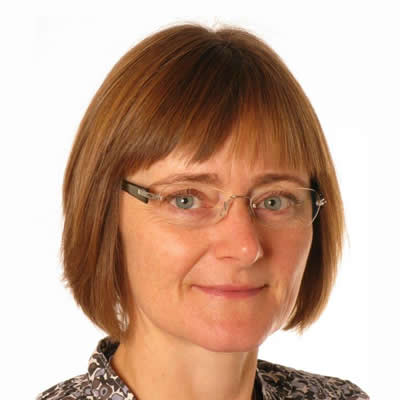
Laura Boyle M.Agr.Sc., Ph.D., is a senior research officer with Teagasc, the Irish Agriculture and Food Development Authority with over 25 years’ experience in farm animal welfare science. Laura is an associate member of the European College of Animal Welfare and Behavioural Medicine, President of the Health and Welfare Commission of the European Federation of Animal Science (EAAP) and Editor in Chief of the Animal Behavior and Welfare specialty section in Frontiers in Veterinary Science. She is Adjunct Professor with the School of Veterinary Medicine, University College Dublin and external examiner of the International MSc in Animal Welfare, Ethics and Law with the University of Edinburgh. As well as informing policy at national level, she contributed to the European Food Safety Authority’s 2022 Scientific Opinion on Pig Welfare. Dr. Boyle published over 130 peer-reviewed papers and 300 scientific abstracts and supervised almost 30 postgraduate students. Laura also has education and advisory roles within the animal and grassland research and innovation centre, at Moorepark, Co. Cork where she works.
Margit Bak Jensen is professor in animal behaviour and welfare at the Department of Animal and Veterinary Sciences, Aarhus University, Denmark.
Margits research focus is the development of valid and feasible methods to quantify central aspects of animal welfare, such as behavioural needs and positive affective states. She has developed and validated methods to assess behavioural needs and has applied these to address current animal welfare questions in farm animals. Her current research focuses on animals’ positive experiences and what gives them the opportunity to function well and develop skills. Margit currently chairs the Cost Action LIFT on Positive Animal Welfare (CA21124), and an internal project on Positive Animal Welfare (SOA13) of the European Partnership on Animal Health and Welfare.
In her presentation, Margit will discuss how consideration of animal welfare is shifting from a predominant focus on minimising suffering, towards promoting positive experiences, how this has led to an increase in investigation of positive mental states, and positive animal welfare, and how the LIFT cost action is hoping to support this.
Dr. Antoni Dalmau graduated in Veterinary Science from the Autonomous University of Barcelona (UAB), Spain in 2000, and did his PhD on habitat selection, feeding and social behaviour in wild ruminants. After this, in 2005 he moved to the Institute of Agri-food Research and Technology (IRTA), Spain, where he was contracted in the scope of a European Project with the acronym Welfare Quality. Since then, he has participated in a total of 54 projects focused on animal welfare of farmed species. In the meantime, he participated in the creation of the animal welfare program of IRTA, formed currently by 5 researchers and 8 technicians. Since 2016 he is a diplomate from the European College of Animal Welfare and Behavioural Medicine. He is specialized in behaviour and welfare and his main interest is to understand in deep detail how farm animals behave. Currently, he is the coordinator of the Welfare Quality Network.
In his presentation Antoni will discuss animal welfare assessment protocols with regard to inputs to outputs, and from initial consideration of the five freedoms to moving on to the five domains.
Mette is professor in animal welfare during critical life events at AU-Viborg, Department of Animal and Veterinary Sciences, Aarhus University, Denmark. In her research, Mette is inspired by the concept of OneWelfare and aims to contribute to the establishment of knowledge in an area where there are many societal concerns and opinions. The research links ethology and veterinary science and focuses on the welfare of farm animals when kept under conditions, where easy solutions are often lacking. A large part of her research is focused on improvement of the understanding of the welfare effects of transport and related management in pigs, cattle and poultry with a special emphasis on cull animals. In addition, Mette is a member of the EFSA Animal Health and Welfare Panel.
Across farm animal species, the welfare of cull animals – sows, dairy cows and hens – has received limited attention. In her plenary presentation, prof. Mette S. Herskin will discuss potential challenges to animal welfare during this life phase focusing on sows. Based on results from a series of studies, potential welfare hazards and how these relate to on-farm, transporter and abattoir management decisions will be reviewed.
Bob Fischer is Professor of Philosophy at Texas State University, Senior Research Manager at Rethink Priorities, and Director of the Society for the Study of Ethics and Animals. His most recent books (authored, co-authored, and edited) include Animal Ethics—A Contemporary Introduction (Routledge, 2021), Wildlife Ethics: The Ethics of Wildlife Conservation and Management (Wiley, 2023), and Weighing Animal Welfare: Comparing Well-being Across Species (Oxford, 2024). He is particularly interested in the challenges associated with quantifying animal welfare, making interspecific tradeoffs, and assessing welfare in relatively understudied species, such as farmed crustaceans and insects.
Without the ability to make principled tradeoffs between human and animal welfare in benefit-cost analysis, it is impossible to assess the net impacts of policies on a common scale; instead, policymakers are left with human impacts on one side of the ledger, impacts on animals on the other, and no obvious way to strike a non-arbitrary balance between them. Bobs talk will discuss novel strategies for making such tradeoffs by considering measurable empirical indicators that may be correlated with welfare potential across species, where welfare potential is a measure of how well and poorly off an individual of a given species can be compared to humans.
Dr. Jan Langbein received his Doctoral Degree in Zoology, from Humboldt-University Berlin, Germany in 1992, on the topic of Comparative investigations on the grazing behaviour of cattle at the tropical pasture (Cuba). From 1992-1997 he carried out Post-Doctoral Research, at the Leibniz Institute for Zoo and Wildlife Research (IZW), Berlin, Germany, and from 1997-2001 was a research scientist, at the Institute for Applied Agroecology, Rostock, Germany. Since 2002 he has been a senior scientist in the Research Institute for Farm Animal Biology (FBN), Dummerstorf, Germany
The focus of his actual work is on the improvement of welfare and health of farm animals in animal-friendly husbandry. Jan wants to contribute to the understanding of welfare-improving adaptation and evaluation processes of farm animals. In particular, he is concerned with the cognitive abilities of farm animals and the consequences of cognitive enrichment for animal welfare, as well as with the phenotyping and ontogenetic development of individual and social patterns of response and evaluation.
In the first part of Jans talk, he will present some examples from his research on associative learning and complex cognitive phenomena in goats. In the second part, he will highlight two examples of how we can use the cognitive abilities of cattle and pigs to improve management and animal welfare.
Emma Roe is Professor of More-Than-Human Geography at the University of Southampton. She is a leading social scientist in the field of human-animal relations, especially farm and laboratory animals. She has been studying farm animal welfare for 20 years instigated through international food retail, food service and farm assessment research funded through the EU WelfareQuality© (2004-2009) project. She is the co-author of Food and Animal Welfare (2018) published by Bloomsbury Press. In addition, she has studied laboratory animal research for the last 14 years. Initially her interests with Prof Beth Greenhough (Oxford) were on how the ethical principles of the 3Rs were put into practice through the work of laboratory animal care technicians. Since 2017 as co-investigator of the 6-year Wellcome-funded programme of research called ‘The Animal Research Nexus she led a study into the breeding, supply and rehoming of laboratory animals, out of which was created the Openness in Animal Research 2020 award-winning The Mouse Exchange. She is a co-editor, and co-author of multiple chapters, of Researching Animal Research (2024) published by Manchester University Press. She is also co-editor of Participatory Research in a more-than-human world (2017), published by Routledge. Her current research includes leading the interdisciplinary research project ‘Changing Chicken for Net-Zero’.
Emma will draw on over 20 years’ of experience of working in the field of human-animal relations to discuss what the humanities and social sciences can contribute to improving farm animal welfare. This field of research has supported the development of methodologies where the animal can be considered as an active research participant, both within human-animal encounters, or through relating to the animal in creative form. Thus the animal or animals can be understood as having an agency in shaping socio-economic and cultural relations.
Tamara is a veterinarian with an MSc in Equine Science and a PhD in Veterinary Science, and is currently an Associate Professor at the Veterinary Faculty of the Universidad Austral de Chile located in Valdivia, Chile. Her research focus is applied animal behaviour and welfare, with a particular interest in studying different aspects of working equids welfare, including physiological responses to work, human-animal interactions and behaviour. Tamara is the director of the Animal Welfare Program of the Universidad Austral de Chile, which is part of the WOAH Collaborating Centre for Animal Welfare and Sustainable Livestock Systems. In her presentation she will discuss the subject of working equids, and the link between human and animal welfare under a sustainability framework.